Can I Become a Coach? An Honest Guide for Women Considering a New Career
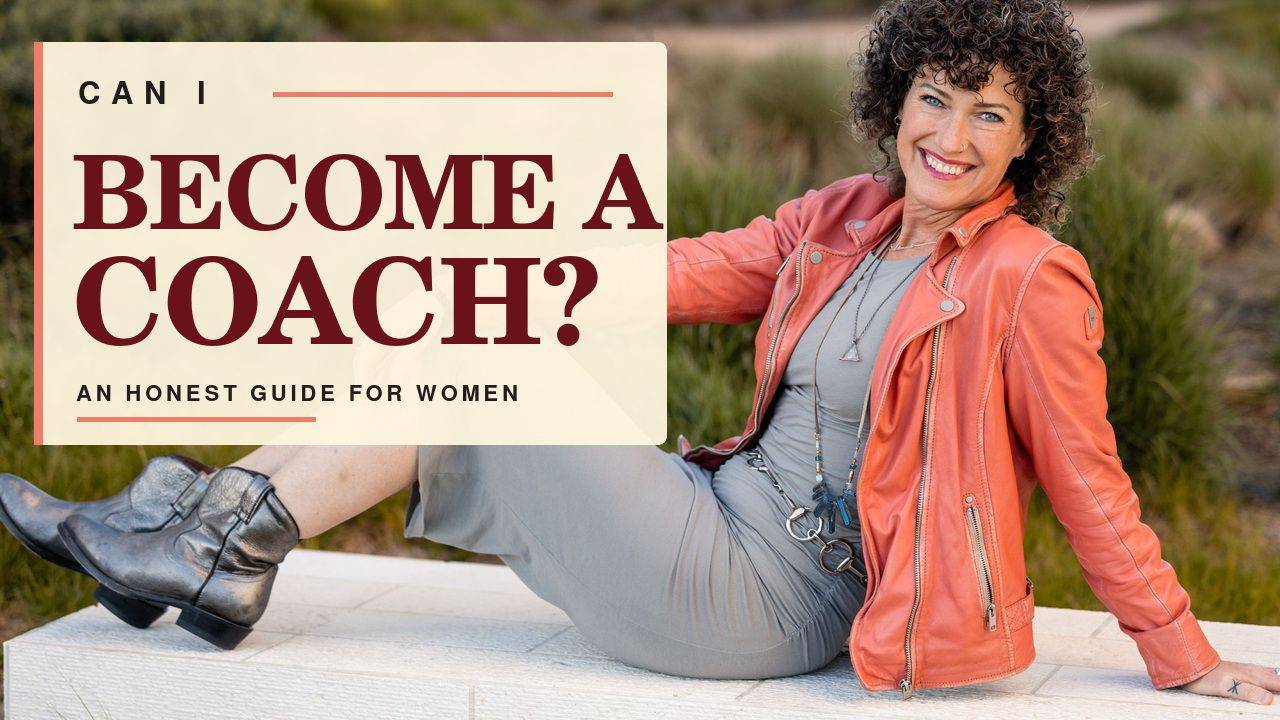
Can I become a coach?
The short answer is yes. Your age, your previous career, the years you spent raising children, or the fact that you don’t have a psychology degree—none of those things disqualifies you.
The more honest answer depends on another question:
Are you willing to turn what you know about life into a professional skill?
Women arrive at coaching from wildly different places. You might have spent thirty years in a corporate career that no longer fits. You might have raised a family and reached the point where you want work that belongs to you. You might already teach yoga, practice Reiki, lead women’s groups, or work in wellness. You might simply be the woman everyone calls when a relationship ends, a career collapses, or life stops making sense.
You already know something about helping people.
Becoming a coach means learning how to turn that instinct into work you know how to do well, without taking over, handing out prescriptions, or making another woman’s choices for her.
That’s the real threshold between being a wise friend and becoming a professional coach.
You’ve done hard things. You’ve learned through careers, relationships, losses, ambition, reinvention, and every decision that asked more of you than you knew you had.
Now see how the right training turns that hard-won wisdom into a coaching career that creates more impact and income.
The Question Beneath the Question
Women who ask whether they can become coaches usually aren’t looking for a list of legal requirements.
They’re asking something far more personal:
- Am I too old to begin again?
- Does my life experience count if it didn’t happen in a classroom?
- Will anyone take me seriously?
- Do I need to have my own life completely figured out?
- Is this a real career or an expensive fantasy?
- Do I have enough time to train while working or raising a family?
- What if I’m good at helping people but terrible at selling myself?
These are intelligent questions. You’re considering an investment of money, time, attention, and identity. You deserve a hell of a lot more than a motivational slogan before you make it.
You deserve to know what you already bring to the work, what you still need to learn, and what building a real coaching practice will ask of you.
Your Life Experience Counts
Life experience gives a coach context, discernment, empathy, and range. It teaches you how complicated people are—and how rarely a tidy little piece of advice solves a complicated human problem.
A woman who has led teams for twenty years understands conflict, responsibility, decision-making, and human behavior. A mother understands identity, sacrifice, negotiation, development, exhaustion, and love. A woman who rebuilt her life after divorce understands the difference between advice that sounds good and support that survives contact with reality. A yoga teacher or wellness practitioner already understands how trust develops between a practitioner and the person she serves.
None of it is wasted.
Your previous life becomes part of what makes you good at the work.
Your experience gives you somewhere powerful to start. It doesn’t qualify you to do the work all by itself. You still need to learn how to listen without projecting, ask questions that create insight, know where your role begins and ends, structure the work, and help another woman make decisions that belong to her.
That’s what strong training gives you.
You don’t have to erase your former career or prove that every difficult experience happened for a reason. You learn how to bring your knowledge forward without making another woman’s work about you.
You Don’t Need to Have Your Entire Life Figured Out
Clients don’t need a flawless woman sitting across from them. They need a coach with integrity, skill, awareness, and clear boundaries.
A coach still has problems. She still gets confused. She still needs support. She has days when she knows exactly what she’s doing and days when life knocks her sideways. Permanent enlightenment isn’t part of the job description.
What qualifies her is the training to know the difference between her experience and her client’s experience—and the maturity to keep that distinction intact.
That distinction changes everything.
Feminine psychology gives a coach a framework for understanding how a woman’s relationships, culture, safety, authority, desire, and unconscious beliefs shape the choices she makes.
An untrained helper hears a client’s story and says, “Here’s what I did. You need to do the same.”
A skilled coach hears the same story and asks questions that help the client recognize her own desires, choices, assumptions, and authority.
Your life doesn’t need to be perfect. You do need enough awareness to recognize your own unfinished business and keep from trying to resolve it through your clients.
You Aren’t Too Old
Coaching is one of the rare professions where getting older gives you more to work with.
By forty, fifty, or sixty, you have watched people make choices and live with their consequences. You have witnessed marriages, careers, friendships, losses, reinventions, financial decisions, family dynamics, and the strange ways human beings resist the very thing they say they want.
You know that change takes more than enthusiasm.
You also know that people are complicated. You’re less dazzled by easy answers and more capable of helping a woman tell herself the truth.
Age doesn’t replace training. It gives training more material to work with.
The larger obstacle isn’t your age. It’s the fear that beginning again means everything you did before now counts for nothing.
It doesn’t.
A second career lets you use your first career, your relationships, your education, your mistakes, and your hard-won wisdom differently. If age is the question keeping you awake, read Can You Become a Life Coach After 40?
You Can Train Without Blowing Up Your Current Life
Becoming a coach doesn’t require walking into work tomorrow, throwing your laptop at your manager, and announcing that you have found your purpose.
You get to build your way into it.
That might mean studying while you’re still employed, practicing new skills, figuring out which women you want to serve, developing an offer, and working with your first clients before you decide whether coaching becomes supplemental income or a full-time business.
This gives you something far more useful than blind faith: evidence.
You discover whether you enjoy coaching as much as you imagined. You learn how much time client work takes. You see which problems you’re equipped to address. You test an offer with real women. You gain experience before asking the business to support your entire life.
Women can do it all, but they can’t do it all at the same time.
You don’t need to cram certification, employment, family, marketing, clients, and an identity transformation into every available hour. Build the next stage in an order your actual life supports.
You Need More Than the Ability to Give Good Advice
Women come to coaching because they’ve always been the wise friend.
You could start there, but it isn’t going to qualify you to do the work.
Good coaching means knowing how to:
- Listen for what a client is saying and what she is avoiding
- Ask questions that return authority to the client
- Recognize when advice creates dependence
- Establish clear ethical and professional boundaries
- Distinguish coaching from therapy, consulting, teaching, and friendship
- Help a client translate insight into action
- Work with a clear, repeatable method
- Structure and price an offer
- Explain the value of the work without promising outcomes you don’t control
Women deserve coaches who know what they’re doing.
You deserve training that gives you more than inspirational material and a certificate of completion. You need to use the method, practice with real people, get thoughtful feedback from a human being who knows your work, and learn how to turn that work into a credible paid practice.
Do You Need a Degree or Certification?
You don’t need a psychology degree to coach women. You do need to understand where coaching ends and when a client needs a licensed mental-health professional, attorney, financial advisor, physician, or another specialist.
A robust, credible certification gives you exactly what you need to coach women in a transformative way. It gives you far more than daily prompts, workbooks, journal entries, and productivity hacks to pass along to a client.
Look for training with:
- A clear methodology
- Practical coaching skills
- Ethics and scope of practice
- Application with real client situations
- Feedback or supervision
- Clear standards for certification
- Offer development and business preparation
It’s far more important to understand what you’ll know how to do when you finish. Will the founder or another qualified professional actually assess your skills? Will you hear from a human being who has seen you coach? Will you receive specific feedback that helps you get better? Will you learn how to create a professional offer and begin finding clients?
Those answers tell you whether you’re getting real professional education or buying a pile of content with a certificate at the end.
If you’re looking for education built specifically for the work of coaching women, The Satisfied Method™ Coach Certification combines feminine psychology, applied coaching skill, ethical scope, observed practice, useful feedback, and the business education behind credible paid work.
Your Next Career Starts Here
See what your coaching business could look like.
Explore the certification free for seven days. Put yourself in the coach’s seat, map an offer women will pay for, see how your work could create meaningful income, and discover what becomes possible when helping women becomes the work you’re known—and paid—for.
Can Coaching Become a Real Source of Income?
Absolutely—with skill, a clear offer, a specific audience, and the training to build an actual business.
Certification by itself doesn’t produce clients. Neither does a social-media account, a website, or the hope that people will somehow discover how gifted you are.
A paid coaching practice asks you to learn two different things:
- You must know how to create meaningful results with clients.
- You must know how to communicate whom you help, what you help her accomplish, and why your approach is worth paying for.
You might want a small practice alongside another career. You might want several private clients and meaningful income of your own. You might want to build groups, programs, workshops, retreats, or a complete education company.
There’s no wrong size for a coaching practice. Each version involves different choices.
A better question than “How much do coaches make?” is, “What kind of practice do I want, what offer supports it, and what am I willing to build?”
Signs Coaching Fits You
Coaching deserves serious consideration when:
- Women already trust you with the truth about their lives
- You are fascinated by why people do what they do
- You want meaningful work grounded in human transformation
- You can respect another woman’s choices even when you would choose differently
- You want a professional method instead of relying on instinct alone
- You are willing to practice, receive feedback, and improve
- You want to create an offer and learn how to invite people into it
- You value freedom, agency, and work structured around your life
Coaching is a poor fit when you need clients to follow your advice, admire your wisdom, or validate your own transformation. It’s also a poor fit when you expect a certification to manufacture a business without learning how to talk about your work, make offers, and become genuinely good at what you do.
The work is deeply human. The business asks you to become a businesswoman.
You need training in both sides of the work so you can help women powerfully and build a business that succeeds.
How to Begin
Start with four questions:
Who do I understand? Think about the women whose experiences, ambitions, conflicts, or transitions you understand from the inside.
What do I want to help her change? Name a real result rather than a broad desire to empower people.
What must I learn to help her responsibly? Look for the method, ethics, coaching skills, feedback, and business education that bridge the gap between caring about women and knowing how to coach them.
What kind of practice fits my life? Decide whether you want supplemental income, a second career, a small private practice, or a larger business. Your answer shapes the training, offer, schedule, and client-acquisition strategy you need.
You don’t need to know every answer before you begin.
You need enough honesty to recognize what you already bring—and enough humility to learn what you don’t yet know.
The Answer Is More Specific Than Yes
Yes, you can become a coach.
You can begin after forty. You can begin after raising children. You can begin after decades in corporate work. You can add coaching to an existing yoga, healing, or wellness practice. You can study while keeping your current income intact.
Your history isn’t standing between you and this work. It’s where you begin.
Training turns that history into professional skill. Practice helps you trust your ability to use it. A clear offer turns your work into something another woman understands and chooses to buy.
That’s how a desire to help becomes a credible coaching practice.
If you’re ready to see what this career could look like for you, explore The Satisfied Method™ Coach Certification free for seven days.
Put yourself in the coach’s seat. Imagine helping women change their lives, building an offer with your name on it, and creating income through work that changes your life, too.
SHOW ME WHAT MY COACHING CAREER COULD LOOK LIKE →
Frequently Asked Questions
Can anyone become a coach?
Women enter coaching from corporate careers, education, motherhood, wellness, entrepreneurship, caregiving, and dozens of other backgrounds. Your experience gives you a place to begin. Professional training teaches you how to turn that experience into ethical, useful coaching skill.
Do I need a degree to become a life coach?
You don’t need a psychology degree to become a life coach. You do need education in coaching skill, ethical scope, boundaries, methodology, client care, and the people you intend to serve. The quality of the training tells you far more than the credential attached to it.
Can I become a coach after 40 or 50?
Yes. Your age gives you decades of work, relationships, decisions, mistakes, reinventions, and human experience to draw from. Training helps you use that knowledge professionally without assuming another woman needs to make the choices you made. Read Can You Become a Life Coach After 40?
Can I train to become a coach while working full-time?
Yes. You can train, practice, develop your niche, and create your first offer while keeping your current income intact. This lets you build evidence before making a larger career decision. Read How to Start a Coaching Business While Working Full Time.
How long does it take to become a coach?
The timeline depends on the depth of the program, the amount of practice involved, and the standard used to assess your work. Focus on what you’ll know how to do when you finish, how your skills will be evaluated, and whether a qualified professional will give you useful feedback.
Can coaching become a real source of income?
Yes—with skilled client work, a clear audience, a defined offer, credible communication, and consistent client acquisition. The income comes from the business you build around the coaching, not from owning a certificate.
What kind of coaching certification do I need?
Choose training with a clear method, applied coaching skill, ethical scope, real practice, human feedback, standards for certification, and practical business education. The program needs to prepare you to work responsibly with the women you intend to help.
This article provides general educational information rather than legal, financial, medical, tax, therapeutic, or income advice. Professional rules and business requirements differ by location.
Alanna Kaivalya, Ph.D., is an author, educator, founder of The Satisfied Woman, and creator of The Satisfied Method™ Coach Certification. She has spent more than twenty years teaching psychology, mythology, women’s transformation, professional education, and the work of building a life on a woman’s own terms.
See what your coaching career could become.
Explore The Satisfied Method™ Coach Certification free for seven days. Put yourself in the coach’s seat, map the business and income you want to create, and see how helping women change their lives could change yours.
Start exploring immediately. No login required.