Can You Become a Life Coach After 40? Turn Your Experience Into a New Career
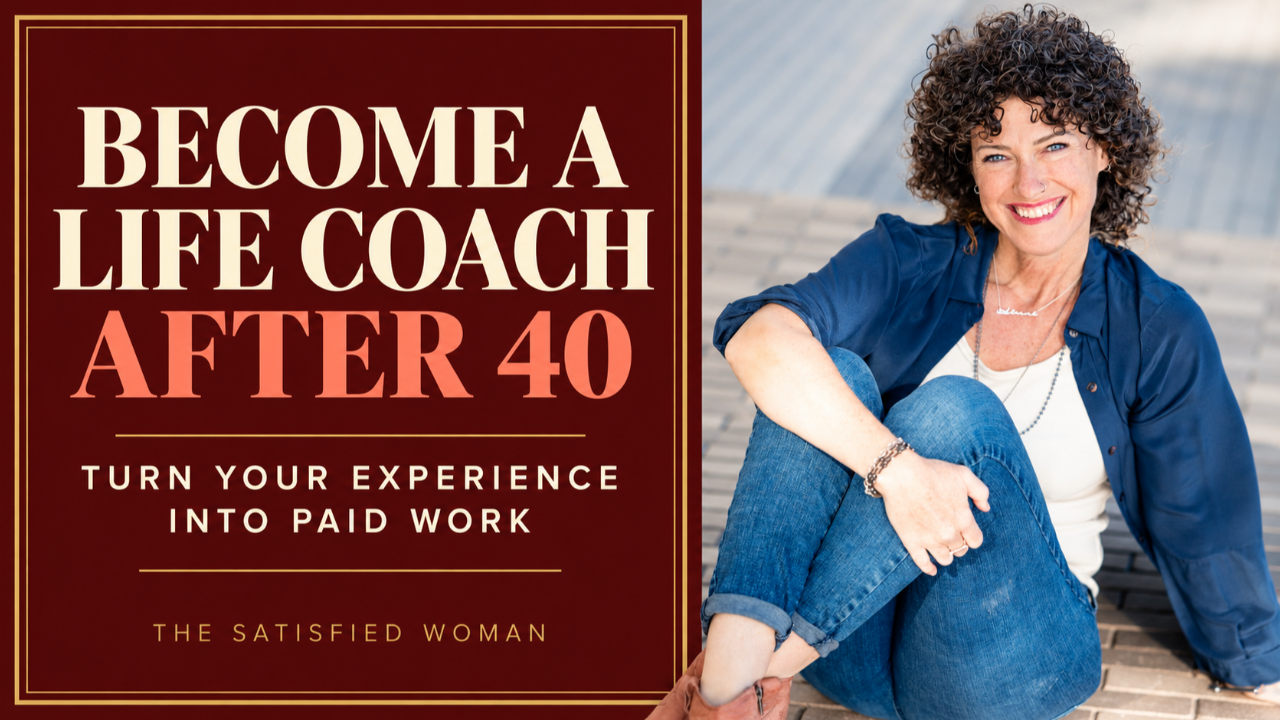
If you’re over 40 and wondering whether you can become a life coach, here’s the answer: yes. Your age isn’t the obstacle. It might be the reason you’re finally qualified to recognize the work you’re here to do.
By 40, a woman has collected a life.
She has built a career, raised children, survived relationships, changed directions, made money, lost money, cared for other people, learned what works, and discovered what she’ll never tolerate again. She’s spent decades developing judgment that no weekend workshop could hand her.
She’s also become the woman other women call.
They call when the marriage is falling apart, the career no longer fits, the business has stalled, or they can’t tell whether they need a new plan or an entirely new life. She listens long enough to see what’s happening and asks the question that changes the conversation.
Then she calls it being a good friend and gives the whole thing away for free.
At 40, you’re not too late. You’re finally experienced enough to stop devaluing what you know and start building the professional skill, method, and business that allow your wisdom to become paid work.
Is 40 Too Old to Become a Life Coach?
No. Forty isn’t too old to become a life coach. Neither is 50 or 60.
Coaching isn’t a profession that rewards youth simply for being young. Clients aren’t hiring you because you figured out how to film a reel. They’re hiring you because you understand the problem they’re living through, have the skill to guide real change, and bring enough judgment to know that another woman’s life isn’t a place for careless advice.
The woman searching for help with divorce, leadership, burnout, relationships, money, caregiving, identity, or reinvention may actively want a coach who has lived long enough to understand complexity.
She doesn’t need you to have lived her exact life. She needs you to recognize the stakes, respect what she’s responsible for, and help her find a way forward that belongs to her.
Age doesn’t create those abilities by itself. Plenty of people get older without becoming wiser. Your years become valuable when you examine what they taught you, develop professional coaching skill, and turn what you know into a method another woman trusts.
You Aren’t Starting Over After 40
A career change after 40 can feel like returning to the beginning. You look at the certification, the website, the offer, and the first client and think, “I have to start from scratch.”
You don’t.
You’re starting with twenty years of evidence.
Your previous work taught you how to listen, lead, research, communicate, solve problems, manage responsibility, and understand people. Your life taught you things the workplace couldn’t. The divorce, the reinvention, the years of caregiving, the business you built, the team you led, the recovery you fought for, or the identity you had to rebuild all gave you knowledge.
The task isn’t to throw away your old life and invent a more impressive one. It’s to identify which part of your experience has become useful enough to guide someone else.
Maybe you spent twenty years in human resources and understand exactly why accomplished women disappear inside companies that keep demanding more. Maybe you rebuilt your financial life after divorce. Maybe you’ve led teams, navigated infertility, recovered from burnout, changed careers, or learned how to establish standards in relationships after years of accepting too little.
Your expertise doesn’t have to come from one dramatic story. It might come from the thing you’ve studied, practiced, and helped other people understand for years.
You aren’t beginning with nothing. You’re deciding what all of it is for.
The Woman Everyone Comes to Is Already Holding Valuable Information
Think about the conversations women repeatedly bring to you.
What does your sister ask you about? Why does your former colleague still call? What do your friends say after talking with you that they didn’t understand before?
Listen for the repeated problem.
Maybe women come to you because:
- you help them see what’s really happening in a relationship;
- you understand how to negotiate, lead, or ask for more money;
- you make business feel clear instead of overwhelming;
- you help them make decisions during divorce or reinvention;
- you understand motherhood, caregiving, grief, sexuality, confidence, or work after burnout;
- you know how to turn knowledge into a practical plan;
- you help them stop talking themselves out of what they already know.
That recurring request is useful information. It tells you where other women already experience your judgment as valuable.
It doesn’t automatically mean you’re ready to charge for coaching. It does show you where a credible coaching specialty might begin.
If you’re unsure how to turn that recurring request into a clear area of work, read How to Choose a Coaching Niche. Your niche begins with the woman you understand, the problem she recognizes, and the result she wants.
Stop Giving Away the Work You Want to Be Paid For
Women are trained to make their intelligence endlessly available.
We listen. We explain. We solve. We become the emotional strategist, career counselor, relationship interpreter, business consultant, and personal emergency line for everyone around us.
Then we struggle to imagine that this work has economic value because we’ve spent our entire lives doing it inside friendship, family, employment, or caregiving.
The answer isn’t to invoice your best friend the next time she calls after a terrible date. Friendship is still friendship.
The answer is to notice that the ability underneath those conversations might be worth developing into a profession.
Professional coaching gives the work an agreement, a method, boundaries, a defined result, and an investment. The client isn’t paying for access to your opinions. She’s paying to enter a structured process with someone trained to help her create change.
That distinction protects both women. You stop trying to run a business through endless unpaid conversations. She receives more than improvised advice from somebody who happens to love her.
This isn’t the kind of work you have to keep giving away. It’s the kind of work you learn to do well enough to be paid for.
Your Experience Is the Beginning, Not the Entire Qualification
Lived experience gives you insight. It doesn’t automatically make you a coach.
Knowing how you rebuilt your life after divorce doesn’t mean every divorced woman should follow your decisions. Building your own business doesn’t mean the same strategy fits another woman’s resources, responsibilities, personality, or goals.
A professional coach needs to know how to:
- listen without making the client’s life about her own story;
- distinguish coaching from therapy, consulting, mentorship, and friendship;
- help a woman uncover her own choices instead of prescribing the coach’s answer;
- understand ethical scope and recognize when another professional is required;
- use a coherent method rather than a collection of inspirational conversations;
- establish agreements, boundaries, confidentiality, and responsible client care;
- guide the client toward a result without promising outcomes she can’t control.
Training doesn’t erase your experience. It makes your experience safer, more useful, and more transferable.
The goal isn’t to become a generic coach who could work with anyone. The goal is to become skilled enough to guide the specific women you understand through the specific transformation you’re prepared to support.
If you’re comparing training programs, Do You Need a Certification to Coach Women? explains what professional preparation adds and what a certificate alone can’t guarantee.
Why Women Over 40 Are Ready for Women-Specific Coaching
Women don’t experience career, money, family, identity, relationships, and the body as separate departments.
A woman considering a career change may also be supporting teenagers, helping aging parents, protecting health insurance, managing a marriage, rebuilding retirement savings, or moving through perimenopause. The practical decision and the psychological decision are happening at the same time.
Generic coaching tends to separate the goal from the life around it. Set the target. Make the plan. Improve accountability. Work harder.
A women-centered method asks a fuller question: What would it take for this woman to create the change without forcing herself to disappear in order to achieve it?
That is why feminine psychology belongs in coaching women. It helps a coach understand how safety, money, relationships, cultural training, authority, desire, embodiment, and self-trust shape the client’s choices.
At this age, you’ve probably lived the consequences of advice that ignored half the equation. You know that a good plan is useless when it requires a woman to betray everything her body and life are telling her.
That understanding belongs in your work—when it is supported by real methodology and coaching skill.
Build a Career That Works With the Woman You Are Now
The conventional workday assumes that a good worker will produce at roughly the same rate, on the same schedule, every weekday. It leaves little room for caregiving, health changes, sleep disruption, perimenopause, or the fact that a woman’s responsibilities rarely end when she closes the laptop.
You don’t need to recreate that system inside a business of your own.
A coaching practice gives you more authority over:
- whom you work with;
- which problems you build your work around;
- how many clients you serve;
- when and where you coach;
- how your offers are structured;
- how much space you protect for writing, teaching, family, health, and the rest of your life;
- how the value you create becomes income for you instead of somebody else.
That freedom isn’t automatic. A poorly designed business becomes another exhausting job with a boss who lives inside your own head.
The point is to build deliberately.
You might coach three days a week. You might begin with private clients and add workshops or group programs later. You might keep your current job while you train, test the offer, sign the first clients, and build a financial bridge.
Your next career doesn’t need to copy the one that depleted you.
A Coaching Business Is a Form of Economic Sovereignty
Many women over 40 have spent decades making money for other people.
They helped build the company, retained the clients, trained the staff, protected the culture, solved the crisis, and made the executive look competent. Their salary paid for their time while the long-term value of their intelligence belonged to the business.
Coaching creates a different possibility.
You get to build intellectual property around what you know. Your perspective fuels the content people find, while your method supports the package they buy. The results your clients create give future women evidence that the work is real. A workshop might grow into a program, and the value you build remains attached to your name.
That doesn’t mean every woman must become an entrepreneur. It means a woman who wants more ownership over her expertise has another option.
This video explains why I believe building a business becomes an important source of authority and financial choice for women:
The goal isn’t simply to escape a job. It’s to create work that lets your experience produce impact and income on terms you have chosen.
Don’t Quit Your Job Before You Build the Bridge
Wanting a different life doesn’t require a reckless exit.
If your current income supports your household, health insurance, retirement contributions, or other people who depend on you, use it while you build.
Train while you’re employed and develop the niche. Start speaking about the work as you create the first offer and sign a few well-matched clients. That experience will show you what it costs to run the business and what it takes to generate reliable demand.
Set a clear financial threshold before leaving the job. That might include:
- a defined amount of savings;
- several months of consistent coaching revenue;
- a plan for taxes, insurance, and retirement;
- evidence that clients will pay for the offer;
- a schedule that proves you can deliver the work without exhausting yourself.
There is nothing less courageous about building a bridge before you cross it. Financial agency gives you better choices.
How to Become a Life Coach After 40
You don’t need to build the entire business at once. You do need to move through the right decisions in the right order.
1. Identify the woman you’re equipped to understand
Begin with the women whose lives, questions, and problems you already understand.
She might be a woman leaving a long marriage, an executive whose success has become unsustainable, a mother returning to paid work, or an expert ready to turn her knowledge into a business.
You aren’t choosing every woman you’ll ever help. You’re choosing the clearest place to begin.
2. Name the problem in her language
She doesn’t wake up asking for empowerment, alignment, or transformation.
She wakes up thinking, “I can’t do this job for another twenty years.” She wants to know whether she should leave the marriage, how to stop doing everything alone, or what to do with the expertise she no longer wants to give to an employer.
Meet her at the problem she already recognizes. Your deeper framework will help her understand why it exists after she enters the work.
3. Get trained to guide the change
Choose professional training that gives you applied coaching skill, methodology, ethical scope, supervised practice, and a clear understanding of the women you intend to serve.
Look beyond the number of modules and the certificate at the end. Ask what you’ll be prepared to do with a real woman whose life doesn’t fit neatly into the lesson plan.
4. Build one clear coaching offer
Create one package around one woman, one recognized problem, and one meaningful result.
Your client needs to understand what you’ll work on together, how your method supports the change, how long the engagement lasts, what support is included, and what the complete investment is.
How to Create a $3,000 Coaching Package walks you through the offer, structure, and income math.
5. Start talking about the work before the business is perfect
Don’t wait for a flawless website, a giant following, or six months of scheduled content.
Choose the platform where you communicate well and begin teaching the ideas you want to become known for. Talk about the woman, the problem, the advice that fails her, and the result you help create.
The response will help you refine the message. It will also begin teaching your existing audience why this work belongs to you.
6. Invite the first women into paid work
Tell your personal and professional network exactly whom you help. Follow up when a woman responds to your content with real interest. Teach inside communities where the right women already gather.
Your first clients don’t require an enormous audience. They require a clear message, a credible offer, and enough consistency to trust that you’re serious about the work.
Read How to Get Your First Coaching Clients Without a Large Audience for the complete client-acquisition plan.
7. Let real coaching refine the business
Your first clients will show you which language they use, where they get stuck, what support they need, and which parts of your method create the greatest movement.
Use that evidence to improve the offer. Develop articles, workshops, and resources from the questions that arise in the work. Let the business become more precise because you’re serving real women—not because you spent another six months thinking about it alone.
How Much Can a Life Coach Make After 40?
Your age doesn’t determine your coaching income. Your niche, skill, offer, pricing, audience, sales process, expenses, client results, and capacity all affect what the business produces.
The advantage of starting after 40 is that you probably already have professional relationships, subject-matter expertise, communication skill, and a network that trusts your judgment. Those assets shorten the distance between training and credible paid work.
They don’t replace a business model.
If your package is $3,000, the gross-revenue math looks like this:
- one new client creates $3,000;
- two create $6,000;
- three create $9,000;
- four create $12,000.
That is gross revenue before taxes, expenses, refunds, and the timing of payment plans. It also isn’t a promise that clients appear because you chose a price.
It shows why a clear package gives you a more useful business model than trying to fill every week with unrelated hourly sessions.
How Much Can a Life Coach Make? explains the larger revenue picture.
What If You’re Afraid Nobody Will Take You Seriously?
Credibility doesn’t come from pretending you have never doubted yourself.
It comes from knowing your field, developing the skill, showing up consistently, explaining your perspective clearly, and doing excellent work with the women who hire you.
You don’t need to position yourself as the person who has solved every human problem. You need to be credible in the specific work you offer.
Start with what you know and get trained for what you don’t. Keep the offer inside work you’re qualified to guide.
Your age isn’t the embarrassing part of your bio. It’s evidence that you have worked, learned, changed your mind, recovered from bad decisions, and lived long enough to understand that a human life rarely moves in a straight line.
The right client isn’t looking for a flawless woman. She’s looking for someone who sees what she’s facing and knows how to help.
Your Next Career Doesn’t Have to Look Like Your Last One
You have already given years of your intelligence to jobs, families, institutions, relationships, and people who benefited from your ability to make things work.
Now you get to decide what your knowledge becomes.
It might become private coaching for women navigating the experience you understand best. It might grow into workshops, group programs, writing, speaking, professional education, or a body of work with your name on it.
You don’t have to force yourself into another role that pays for your hours and keeps the value you create.
You can build work around your wisdom, professionalize the way you help, and create a career with more ownership, meaning, and income.
At 40, you’re not running out of time.
You’ve finally collected enough of yourself to decide what the next part is worth.
Make More Impact. And Income.
Come get your coaching-offer blueprint.
Join the free Open Classroom to experience The Satisfied Method™ Coaching Certification from the inside. You’ll see the training, watch real coaching, and learn how your experience becomes skilled work that changes women’s lives.
You’ll also get Make More Impact + Income: Your $3,000 Coaching Offer Blueprint to map the woman you serve, the result she wants, your method, your package, and the income your work is built to create.
COME INSIDE + GET MY BLUEPRINT →
Join free. Watch immediately. Start building the work women will pay you to do.
Continue Building Your Coaching Work
Frequently Asked Questions
Is 40 too old to become a life coach?
No. Women begin coaching careers in their 40s, 50s, and beyond. Your life and professional experience can become a meaningful advantage when you pair it with strong training, a specific niche, ethical scope, and a credible method.
What qualifications do I need to become a life coach after 40?
Coaching is generally an unlicensed profession, though rules vary by location and specialty. Look for substantive education in coaching skill, methodology, ethics, boundaries, client care, and the population you intend to serve. A certificate should represent real preparation rather than attendance alone.
Is life coaching a good second career?
Life coaching can become a strong second career for someone who understands a specific client problem, enjoys guiding change, is willing to develop professional skill, and wants to build a business around that expertise. It isn’t instant income. It requires training, an offer, marketing, enrollment, and excellent delivery.
Do I need to quit my job to start a coaching business?
No. Many women train and begin coaching while still employed. Keeping your current income while you validate the niche, build the first offer, serve clients, and create a financial bridge can give you more authority over the eventual transition.
What is the best coaching niche for a woman over 40?
The best niche sits where your expertise meets a problem women already want help solving. Look at the questions women repeatedly bring to you, the work you have studied or practiced deeply, the result you are qualified to support, and the women whose lives you genuinely understand.
How do I get my first coaching clients after 40?
Start with a clear niche and one paid offer. Speak consistently about the problem you solve, tell your personal and professional network exactly whom you help, teach where those women already gather, and follow up when someone expresses genuine interest. You don’t need a giant online following.
How much money can I make as a life coach?
Income varies widely. Your niche, training, offer, price, client capacity, lead generation, enrollment skill, expenses, and results all affect revenue. Build the business from real numbers rather than industry income claims.
This article provides general educational information rather than legal, financial, medical, tax, therapeutic, or income advice. Professional rules and business requirements differ by location.
Alanna Kaivalya, Ph.D., is an author, educator, founder of The Satisfied Woman, and creator of The Satisfied Method™ Coaching Certification. She has spent more than twenty years teaching psychology, mythology, women’s transformation, professional education, and the work of building a life on a woman’s own terms.