How to Build a Coaching Business as a Stay-at-Home Mom
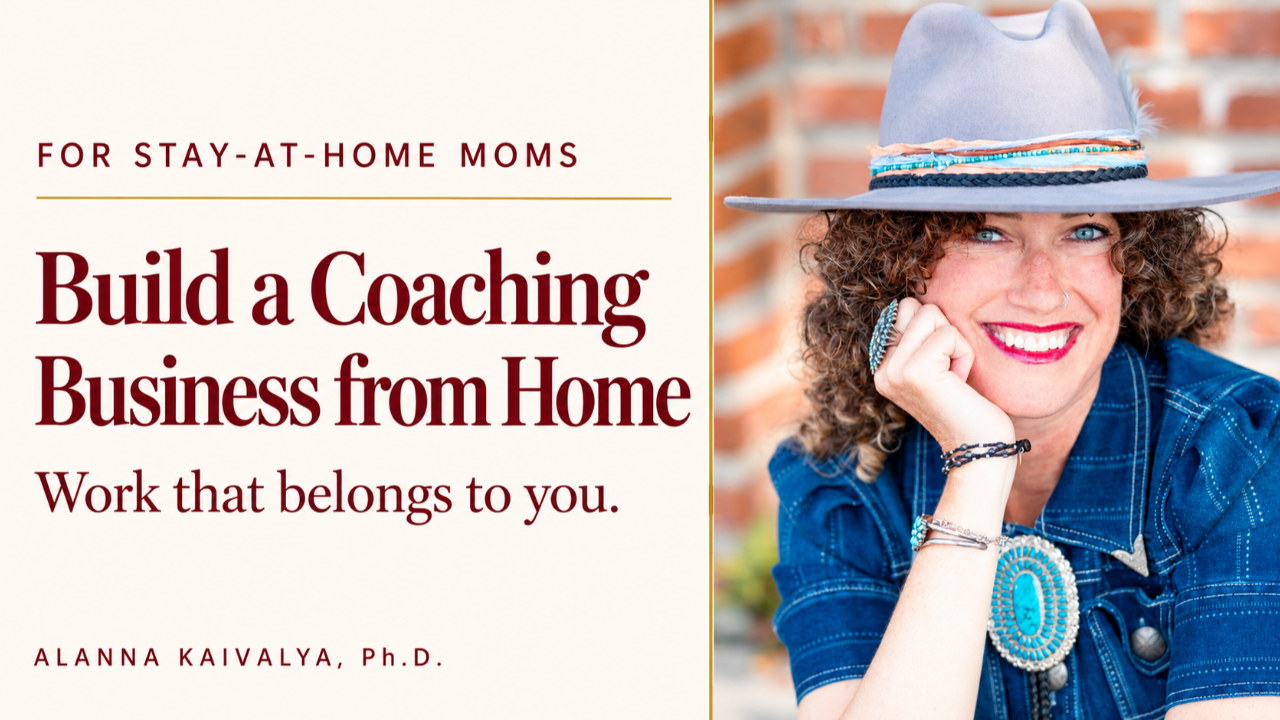
To build a coaching business as a stay-at-home mom, choose the women you want to help, train in a coaching method, create a clear paid offer, and build your schedule around the life you have. You work from home, choose your hours, and decide how many clients to take on. A good coaching certification teaches you the skills, the tools for finding clients, and the boundaries that make your working time your own—even as a mom.
“I just want a little patch of grass to call my own.”
I was on a call with a mom who was raising four kids. They were making a ruckus around her, and her husband was in the other room yelling at her to do something. Through tears, she looked at me and said:
“Alanna, I just want a little patch of grass to call my own. Something that’s mine.”
She wanted her own work. She wanted to bring her own ideas forward. She wanted her own money. She wanted an identity that extended beyond being someone’s mom or someone else’s wife.
She went on to develop a coaching practice helping stay-at-home moms and other women get fit at home without having to go to a gym. She understood their lives. She knew what they needed and built her work around helping them.
That conversation showed me how powerful a coaching practice is for stay-at-home moms who want a life beyond the household. Every woman is someone bigger than “Mom.” She has her own interests, her own ideas, and something to contribute that belongs to her.
For this woman, building a practice gave her sovereignty. It gave her work to talk about, decisions to make, and a part of her life where she knew herself through what she created.
I speak with mothers who have extraordinary wisdom, education, and expertise, yet struggle to name who they are outside of being Mom. Motherhood becomes the answer to every question about who they are.
You love your children completely and you still want a professional life. You’re devoted to your family and you want money of your own, earned through your own work. Those desires belong together.
Women can do it all, but we can’t do it all at the same time
This is one of my big rules in The Satisfied Method. I apply it to the way we build a business just as much as I apply it to the rest of our lives.
A practice with two clients looks different from a practice with twelve. A mom with an infant has different available hours from a mom whose kids are in school. Build the business around the life you actually have.
Another woman I worked with wanted to help her two daughters start their adult lives. They were approaching college age, and she wanted to help pay for an apartment and make sure they had a safe car to drive. She shifted her business model into coaching to earn more money for those goals.
That’s a different stage of motherhood, with a different reason to build a business. She wanted to use her skills to give her daughters a stronger start.
You decide who you work with, how many appointments you offer, and when you work. You also set agreements with your clients and arrange the support you need at home. That’s how you make the flexibility work in real life.
1. Choose work that inspires you—and women you love helping
Think about the expertise you had before anyone called you Mom. What did you study? What work did you do? What do women come to you to ask about? What do you know because you’ve spent years learning it, living it, or helping someone else through it?
Your professional direction starts with what inspires you and the women you’re deeply interested in working with. That includes helping mothers rebuild an identity beyond motherhood, helping women establish boundaries in their relationships, or helping another practitioner find a stronger direction for her work.
The mom in my story chose at-home fitness because she understood the women who wanted to get fit and struggled to get to the gym. Her idea gave them a clear reason to work with her.
Get that specific about your own work. “I help women” tells us very little. “I help moms who’ve lost themselves in everyone else’s needs decide what they want for their own lives” gives her something to recognize.
Start with these four questions:
- Which women do I most want to work with?
- What do they want help changing?
- What experience and skills do I already bring?
- What do I want to learn so I feel confident guiding them?
For more examples, read how to choose a coaching niche.
2. Get training that teaches you how to do the work
If women already come to you for advice, pay attention. They’re telling you something about what they value in you.
Coaching training gives that ability a structure. You learn how to listen, understand what’s happening beneath the problem she brings you, and help her make decisions that change her life.
A good program gives you tools to use, opportunities to practice, and feedback on how you’re doing. It teaches you how to set boundaries with clients and recognize when she needs help from someone with a different specialty.
I’ve spent more than twenty years developing education programs. I know how much stronger your confidence becomes when you understand the work, practice it, and receive guidance on what you’re doing.
That’s why my Satisfied Method™ certification includes twelve practitioner trainings across six modules, three private Practitioner Intensives with me, coaching practice, and assessment of your skills. You learn feminine psychology, how to coach women, and how to turn your expertise into an offer women hire you for. You earn the Satisfied Method™ Certified Coach credential by demonstrating your ability to use the method.
Choose training for the work you want to do. The mom’s fitness practice came from her interest in fitness; that work calls for its own specialist preparation. My certification trains you in feminine psychology and women-specific coaching.
Start by seeing what the training looks like. Come inside my free Open Classroom and explore the teaching and Business Builder.
3. Give your work a place on the calendar
Your working time belongs to you. Decide when it happens, then make the arrangements that let you use it.
Include client sessions, preparation, training, answering inquiries, and finding your next clients. All of that is part of the business.
Let’s say you have six hours a week to start. Set aside two for client sessions, one for preparation and admin, and three for learning and finding clients. Adjust those hours as the practice grows. The schedule tells you what you have room to do; your offer and paying clients determine what you earn.
Watch a recorded lesson during a shorter block of time. Give a client appointment your full attention. Arrange for another adult to take over, use school hours, or include childcare in your business budget.
Talk with clients about cancellation and rescheduling before you start working together. Leave room in the calendar for the unexpected. When a child gets sick, you have an agreement to work from instead of scrambling to decide what to do.
You set the hours and the boundaries. Build them into the business from the beginning.
4. Create one clear way to work with you
Start with one offer a woman understands.
Tell her who it’s for, what you’ll work on together, how many sessions it includes, and how long you’ll work together. Explain what support you offer between appointments.
Set a price that accounts for your time and expenses. That includes preparing for sessions, answering messages, and the training that lets you deliver the work.
Describe what you’ll help her do: make a decision, establish a boundary, clarify what she wants, or take action toward a goal. Keep the promise tied to the work you guide. Her partner’s behavior and other people’s decisions remain outside your control.
My guide to creating a coaching package shows you how to put an offer together. Use the structure to think through your own price, clients, and work.
5. Show the right women how you help them
Finding clients gets its own place on your calendar. A woman needs to know what you do and how to hire you.
Look at where the women you want to serve already ask for help: a local network, a professional community, or searches about the problem you address.
Teach something useful about that problem, then give her a clear next step. If you coach moms who want an identity beyond motherhood, show her how to choose one personal goal she keeps putting last. Explain how you work with her to make decisions and take action toward it. Invite her to a conversation about working together.
Share that teaching where people welcome it. Get permission before making an offer in someone else’s community, and let interested women come forward. Respond to a mother asking for help as a person first.
Keep track of inquiries, conversations, and paid clients. If women read but don’t inquire, check whether they understand the offer and see a reason to want it. If they inquire but don’t hire you, ask what held them back. Their answers tell you what to improve.
Read how to get your first coaching clients without a large audience for a more detailed starting plan.
6. Know what you want to earn—and what you keep
Put a number on what you want this business to contribute to your life. Money for your daughters’ apartment. A savings account of your own. More room in the family budget. Choose a goal that means something to you.
Then do the math. Subtract expenses such as training, software, payment fees, and childcare from the money clients pay you. If a client pays in installments, count the money you’ve actually received.
Work backward from your income goal through your expenses, price, and the number of clients you need. Check that those clients fit the working hours you’ve set aside.
Build room in the plan for learning and finding your first paying clients. Keep another source of income in place if you need money before the practice starts earning. Give yourself a workable starting point and measure your progress against real payments.
Read why financial independence is essential for women for more on what money gives us the freedom to choose.
Your work gets to belong to you
I keep thinking about that little patch of grass.
She knew what she wanted. Her ideas. Her contribution. Her work. Her money.
Motherhood belongs inside a woman's life alongside her interests, expertise, ambitions, and professional identity. Your children get to know a mother who loves them and has something of her own.
Start with the women you want to help. Learn how to guide them. Build a practice that fits your life and gives your work a place in it.
Start building something of your own
Come inside my free seven-day Open Classroom. Explore the training, watch me teach and coach, and use the Business Builder to begin putting your own practice together.
Enter your name and email to start.
Start watching immediately. No login required.
Questions about coaching as a stay-at-home mom
Can I build a coaching business from home?
Yes. Meet with clients online and run the business from home. Give yourself a suitable space, reliable technology, and time when someone else takes care of the kids during appointments.
How many hours do I need?
Start with the hours you have consistently. Include learning, finding clients, preparation, and admin alongside appointments. Set your client schedule within those hours and adjust it as you learn what the work takes.
Do I have to coach mothers?
Your work gets to reflect everything you know. Look at your education, earlier career, interests, and the women you most want to help. Motherhood is part of who you are; your expertise extends beyond it.
Can coaching replace my previous salary?
Work out what replacing that salary requires: your expenses, price, client numbers, and working hours. Test those numbers as you build the practice. Use actual payments and business costs to decide when it earns enough to replace another income.