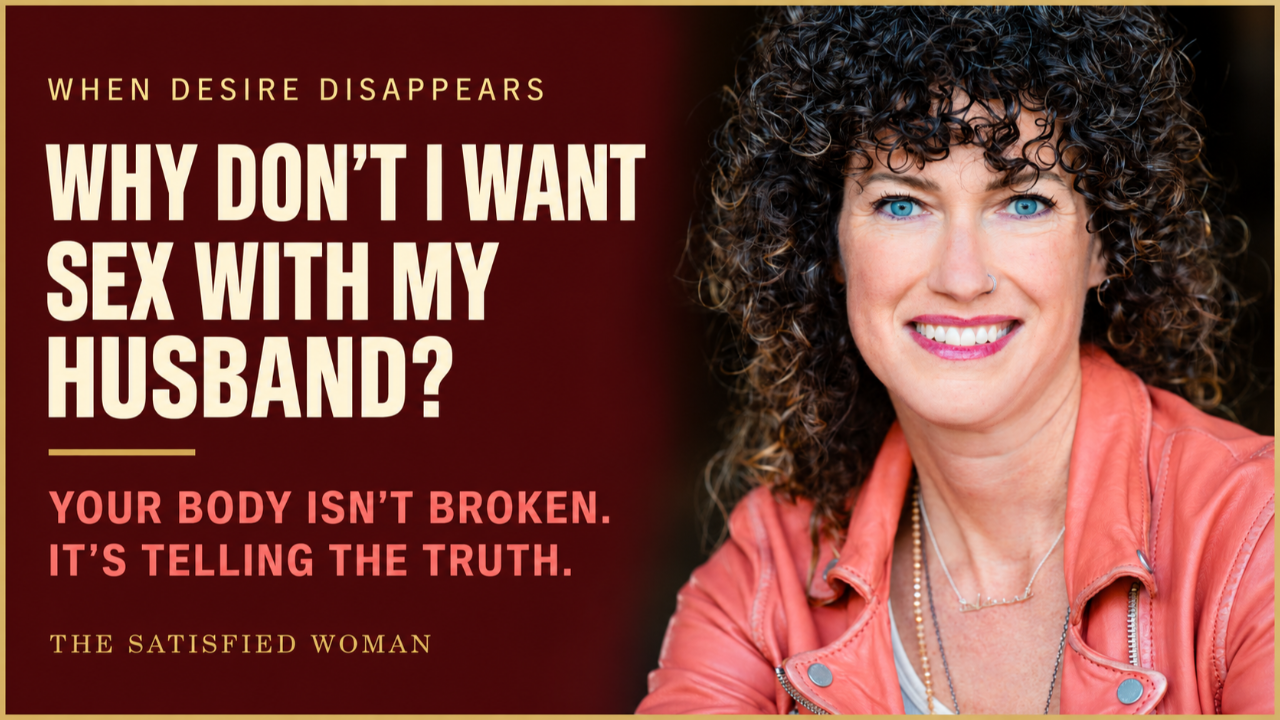
Why Don’t I Want Sex With My Husband Anymore? What Your Desire Is Telling You
You love him.
You built a life with him. You share a home, a history, a family, a thousand private jokes, and a calendar full of responsibilities.
You just don’t want to have sex with him anymore.
Maybe you keep waiting for desire to return after work settles down, the children need less, or you finally get enough sleep. Maybe you have sex because you feel guilty, then wonder why your body feels even less interested the next time.
Your lack of desire isn’t a character flaw. It’s information.
Your body is responding to the relationship you actually have—not the marriage you hoped to have, the man you remember, or the version of yourself you think you’re supposed to become for him.
Your Body Is Telling the Truth
You don’t need to force desire. You need to understand what shut it down.
The free Self to Soulmate Relationship Diagnostic helps you identify what’s missing, name what you require, and see the relationship in front of you clearly.
Why Don’t I Want Sex With My Husband Anymore?
A woman’s desire doesn’t exist separately from the rest of her life.
She brings the entire relationship into the bedroom: how he speaks to her, whether he follows through, whether she feels protected, whether her emotions inconvenience him, whether she trusts him, and whether she spends every day managing him.
Sex doesn’t erase that information. Her body brings the ledger.
You might have lost desire because:
- you feel like his mother instead of his lover;
- resentment has replaced receptivity;
- you don’t feel emotionally safe with him;
- you no longer trust his words or behavior;
- he expects access to your body without cherishing the woman who lives inside it;
- the polarity that once created attraction has evaporated;
- sex hurts, your hormones have changed, medication affects your libido, or exhaustion has flattened your desire;
- you no longer want this relationship, and your body understood that before your mind admitted it.
More than one answer might be true.
The goal isn’t to select a reason from a list and declare the case closed. The goal is to stop treating your body like a malfunctioning appliance and investigate the conditions surrounding your desire.
Desire Is Not a Duty
Women learn to treat sex as part of the maintenance agreement.
Keep him happy. Keep the marriage intact. Don’t reject him too many times. Don’t make him feel unwanted. Try harder. Buy something lacy. Schedule date night. Add sex to the same list that holds groceries, dental appointments, and school forms.
None of that creates genuine desire.
Obligation produces compliance. It does not produce longing.
Sex you repeatedly agree to from guilt teaches your body that intimacy requires leaving yourself behind. You’re physically present while your actual no goes underground. That arrangement damages trust—including your trust in yourself.
Your husband deserves honesty. You deserve bodily sovereignty. Neither of you benefits from a sexual relationship built on duty and concealment.
Your Desire Needs the Four Keys
The Four Keys of feminine satisfaction are safety, security, trust, and being cherished.
These aren’t romantic extras. They create the relational foundation that lets a feminine woman relax, receive, open, and experience pleasure.
Ask what happens to each key inside your marriage.
Safety
Can you be yourself without facing intimidation, ridicule, retaliation, or contempt? Does your body relax near him, or prepare for the next criticism, explosion, or withdrawal?
Security
Do you know that support, partnership, affection, and practical contribution remain available? Or does everything eventually become your responsibility?
Trust
Do his actions match his promises? Does he protect the agreements between you? Does he tell the truth when the truth costs him something?
Being Cherished
Does your emotional experience matter to him? When you’re hurting, does he move toward you with care—or leave you alone because your pain makes him uncomfortable?
A woman who feels unsafe, unsupported, deceived, or emotionally deserted doesn’t need a seduction technique. She needs the relationship to address the missing key.
You Don’t Want to Have Sex With Someone You’re Parenting
You remind him about appointments. You manage his responsibilities. You tell him what the children need. You plan, assign, monitor, and repair.
Then he reaches for you in bed and expects you to switch from household management to erotic receptivity.
Your body doesn’t experience him as a grounded masculine counterpart. It experiences him as one more person who needs something from you.
Mothering an adult man kills attraction because the roles contradict each other. A dependent doesn’t inspire surrender. A man you direct all day doesn’t suddenly feel like the man whose leadership you trust at night.
Read Why Do I Feel Like My Husband’s Mother? if this describes the structure of your relationship. That article shows you how to stop performing his half and discover whether he rises into responsibility.
Resentment Has Entered the Bedroom
Resentment accumulates through thousands of moments that never receive repair.
He watched you clean while he rested. He promised to handle something and forgot. You carried the financial worry alone. He dismissed your exhaustion because his day felt harder. You asked for help, and the request became another project you had to supervise.
Each incident looks small enough to excuse. Together, they create a relationship in which you give and he receives.
Then he wants sex.
His desire lands as another request for access to your energy. He sees intimacy. You see one more need added to the pile.
Do not use sex to plaster over resentment. Name the imbalance. Require repair. Watch what he does after he understands the cost.
Emotional Dismissal Makes Intimacy Feel Dangerous
Sex requires exposure. You are naked, receptive, responsive, and visible.
That exposure feels very different with a man who mocks your emotions, argues with your experience, or uses your vulnerability against you.
If your partner dismisses your feelings, your body has good reason to protect access to its most vulnerable places. You have learned that openness doesn’t lead to care. It leads to defense, blame, or humiliation.
Your body isn’t withholding sex to punish him. It’s responding to evidence.
Emotional safety does not mean he agrees with every interpretation. It means he takes your experience seriously, remains present, and participates in repair.
Polarity Disappears When Nobody Occupies the Masculine
Sexual polarity grows through meaningful difference.
A feminine woman experiences attraction toward a healthy masculine counterpart who brings direction, steadiness, provision, protection, integrity, and presence. Her receptivity meets his grounded action. Her desire and emotional response help direct what he builds.
Polarity collapses when she performs both positions.
She directs the life, carries the responsibility, protects the family, makes every decision, regulates every emotion, and then tries to manufacture feminine receptivity on command.
He waits for instruction, avoids decisions, receives her labor, and wonders why she no longer experiences him as attractive.
You don’t restore polarity by acting smaller, pretending helplessness, or praising mediocre effort. You restore truth by leaving his responsibilities with him, stating what you require, and observing whether his masculinity rises to meet the relationship.
Your Body Deserves Medical Attention Too
Not every change in desire originates in relationship dynamics.
Pregnancy, postpartum recovery, menopause, vaginal dryness, pain, stress, depression, fatigue, illness, and certain medications all affect libido. A sudden change, persistent pain, bleeding, dryness, or distress deserves attention from a qualified healthcare professional.
Investigating your physical health doesn’t invalidate the relationship questions. Investigating the relationship doesn’t replace medical care.
Respect the whole woman. Look at her body, her circumstances, and the partnership she returns to every day.
Tell the Truth Before You Try to Fix the Sex
Begin with honesty.
Not: “I’ll try to be better about sex.”
Try:
“I love you, and my desire has changed. I don’t want to fake my way through this or make promises my body doesn’t mean. I want us to understand what has happened between us and address it honestly.”
Then name the specific condition.
“I spend most days managing the house and directing you. I don’t experience us as partners, and that has affected my attraction.”
Or:
“When I tell you that I’m hurt and you call me dramatic, I stop feeling safe enough to be vulnerable with you. That includes sexual vulnerability.”
Or:
“Sex has become painful, and I’m making an appointment. I’m not agreeing to intercourse that hurts while I get the care I need.”
His response gives you information.
Does he get curious? Does he care about your experience? Does he take responsibility for his part? Does he participate in repair? Or does he coerce, blame, threaten, withdraw affection, or treat your body as property?
You are not responsible for protecting him from every feeling your truth creates.
What If Your Husband Won’t Work on the Relationship?
Plenty of women wait for a husband who refuses counseling, coaching, or any conversation that might require change.
You don’t need his permission to get clear.
You get support. You define what you require. You change the part of the dynamic you have maintained. You stop supplying the labor that conceals the truth. You watch whether he moves toward a healthier partnership or fights to restore the arrangement that benefited him.
If your partner won’t go to counseling, begin with your own advocacy. One willing woman has enough information to stop betraying her own needs and determine what serves her highest interest.
Your Desire Is Giving You an Answer
The answer might be: I’m exhausted.
It might be: I’m angry.
It might be: I don’t trust him.
It might be: I need medical care.
It might be: I’ve become his mother.
It might be: This relationship no longer supports the woman I am.
Listen before you override it.
Your desire does not owe anyone a performance. It responds to the truth of your body and the quality of your relationship.
You don’t need to force yourself back into wanting him. You need enough clarity, support, and sovereignty to understand what your lack of desire is saying—and decide what happens next.
Your Relationship Next Step
Your body isn’t broken. It’s asking you to pay attention.
The free Self to Soulmate Relationship Diagnostic helps you identify what shut desire down, define what intimacy requires, and decide what supports the woman inside this marriage.
Enter your name and email. I’ll send the Relationship Diagnostic immediately.
For the Woman Called to Help Other Women
This isn’t just your question.
Women need skilled advocates who understand desire, polarity, emotional safety, and how a relationship affects the woman inside it.
If you want to help women through this professionally, The Satisfied Method™ Coaching Certification gives you the feminine-psychology methodology, coaching skill, ethical training, and business structure to do it well—and get paid for it.
Questions Women Ask About Losing Desire for Their Husband
Is it normal not to want sex with my husband?
Changes in desire are common, but “common” doesn’t tell you why your desire changed. Examine physical health, stress, exhaustion, resentment, emotional safety, trust, relational roles, and attraction instead of dismissing the change.
Does losing desire mean my marriage is over?
No single symptom decides the future of a marriage. Your loss of desire identifies something that deserves investigation. The relationship’s future depends partly on what you discover and how both partners respond to the truth.
Should I have sex when I don’t want to?
You don’t owe sex to preserve harmony or protect a partner from disappointment. Consent belongs in marriage too. Honest communication, medical care when relevant, and direct attention to the relationship serve both partners better than reluctant compliance.
How do I get my desire for my husband back?
Start by identifying what changed. Address pain, health, medication, sleep, and hormonal shifts with a qualified clinician. Address resentment, unequal responsibility, broken trust, emotional dismissal, and collapsed polarity inside the relationship. Desire has a better chance to return when the conditions that shut it down actually change.
Medical note: This article offers relationship education, not medical diagnosis or treatment. Seek qualified medical care for pain, sudden changes in sexual function, bleeding, or other health concerns.
Keep reading: Why Do I Feel Like My Husband’s Mother? · My Partner Dismisses My Feelings · My Partner Won’t Go to Counseling
Alanna Kaivalya, Ph.D., is the founder of The Satisfied Method™, a contemporary feminine-psychology framework for women’s satisfaction and sovereignty. Her work helps women understand their relationships, reclaim their feminine power, and create lives built on safety, security, trust, and being cherished.