Women Do the Work That Holds the World Together
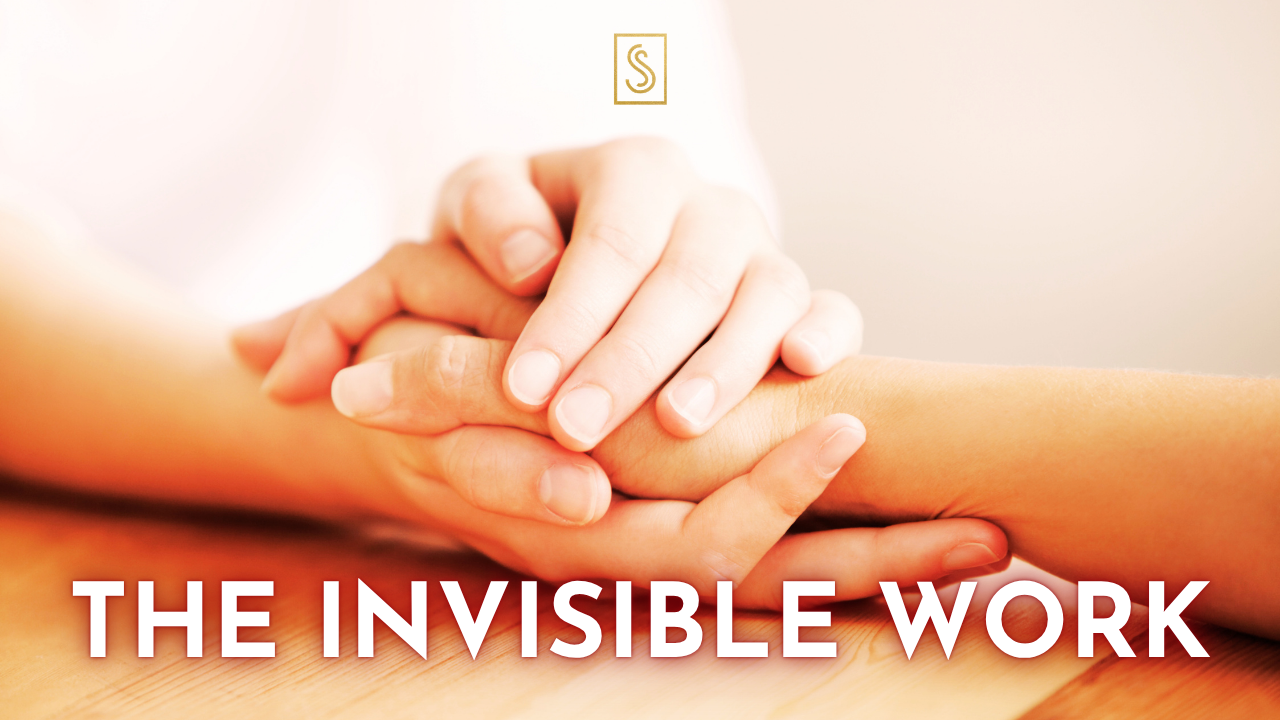
Women are doing work every day that never shows up on a job description.
It’s the emotional labor of sensing the room. The relational labor of holding connection. The regulatory labor of stabilizing families, teams, relationships, and communities when things start to fall apart.
This work is not extra. It’s essential.
And yet, it frequently goes unnamed, unrewarded, and unseen.
When a crisis hits, people don’t go looking for systems or spreadsheets. They go looking for women. They go to the woman who can listen, regulate, hold space, and help them come back to themselves. Women are the emotional calibrators of their environments, whether or not they’ve ever been trained or compensated for that role.
Why Invisible Labor Leads to Burnout
Most women don’t burn out because they’re weak or unmotivated.
They burn out because they’ve been over-trained to overfunction.
From a young age, women are taught to prioritize harmony, anticipate needs, and absorb emotional responsibility. We learn to smooth edges, manage moods, and keep everything running—frequently without language, recognition, or support.
Over time, this invisible emotional labor disconnects women from their own bodies. Fatigue becomes normal. Boundaries feel selfish. confidence in your own judgment erodes as obligation takes precedence over intuition.
This isn’t a personal failure.
It’s a cultural pattern.
Women’s invisible labor keeps entire systems alive.
Emotional management, care, remembering, anticipating, and repairing are valuable even when nobody names or pays for them.
When Care Turns Into Self-Abandonment
Care becomes self-abandonment when a woman’s attention is always outward.
When she consistently overrides her own signals to tend to others, her nervous system never gets to settle. Resentment builds. Desire dulls. Vitality drains.
Many women don’t realize they’re abandoning themselves because the behavior is praised. Being “the strong one,” “the reliable one,” or “the glue” is rewarded—until the cost becomes unsustainable.
True feminine power isn’t about giving endlessly.
It’s about self-possession—the ability to stay connected to oneself while in relationship with others.
Boundaries Are Feminine Infrastructure
Boundaries are not walls. They are structure.
They allow women to continue doing meaningful work without depletion. They clarify what is theirs to hold—and what is not. They create safety for the nervous system and honesty in relationships.
When women set boundaries, systems recalibrate. Some relationships strengthen. Others fall away. Neither outcome is a failure.
Boundaries are how essential work becomes sustainable.
Stop treating your labor as an unlimited public resource.
The Feminine Reset helps you see where your time and energy disappear into everyone else’s life.
Women Were Never Meant to Do This Alone
One of the most damaging myths women carry is that strength means doing it by themselves.
But patterns of giving too much cannot be unwound in isolation. When women begin to reclaim energy and authority, they need witnesses, mirrors, and support. Community is not an add-on—it’s part of the healing.
Inside women-centered spaces, women remember who they are. They practice being seen without overperforming. They learn to receive support without guilt.
This is how invisible labor becomes visible—and valued.
A New Way Forward
The world still needs women’s wisdom, empathy, and capacity to hold complexity.
But women no longer need to sacrifice themselves to provide it.
When women value themselves correctly, everything changes—how they work, love, lead, and live.
Your next step
Bring your labor, needs, and life back under your authority.
Download my free Feminine Reset to reclaim the Sacred No, protect your energy, and decide what you are willing to give from here.
Enter your name and email. I’ll send the Feminine Reset immediately.
If this resonates, I invite you to listen to the full podcast episode above and explore what it looks like to continue this essential work with boundaries, support, and sovereignty.
You don’t need to stop being who you are.
You just need to stop abandoning yourself.
When you're ready, book a private call with me to learn exactly what you no longer need to carry:
Book Your Call
Continue the feminine-power pathway
Five ways to reclaim your feminine power.